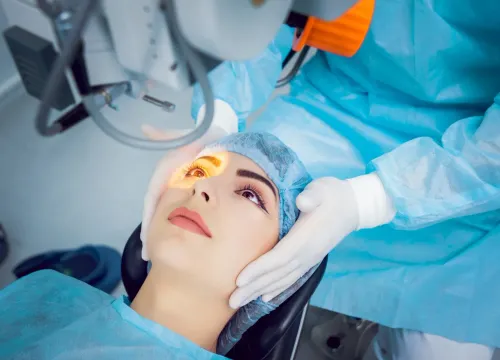

A prosthetic eye can recreate the visible details of a missing or damaged eye, but the result depends on socket healing, eyelid support, implant position and careful matching—not only on painting an iris. By the end, you will know how fitting works, when it is appropriate, what daily care requires and which questions to ask before choosing a prosthesis.
Key takeaways
- A prosthetic eye restores appearance, not sight.
- Fitting requires a healthy, adequately shaped socket.
- Match depends on iris colour, scleral detail and eyelid position.
- Clean the prosthesis with sterile saline and follow your fitter’s instructions.
What a prosthetic eye is—and what it cannot do
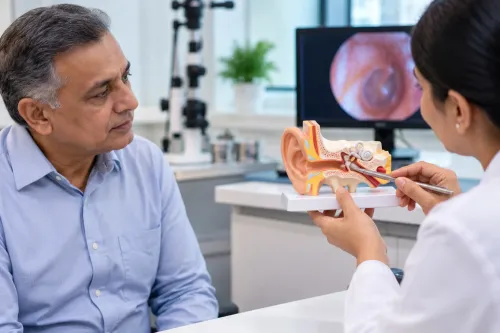
A prosthetic eye is a removable, custom-made acrylic shell that recreates the visible iris, white of the eye and eyelid contour. It is a custom ocular prosthesis, not a replacement for sight.
The orbital implant sits deeper inside the socket after surgery, restoring volume and providing a surface or attachment that can transmit movement to the prosthesis.
| Part | What it is | What you should expect |
|---|---|---|
| Prosthetic eye | Removable visible shell | Cosmetic restoration, not vision |
| Orbital implant | Internal volume replacement | Support and possible movement |
| Enucleation | Entire eyeball removed | The implant and socket shape determine later appearance |
| Evisceration | Eye contents removed; outer coat remains | Muscle attachments may help movement |
| Exenteration | Eyeball and some or all orbital contents removed | A prosthesis alone cannot replace lost orbital structures |
Understanding the enucleation prosthesis relationship prevents unrealistic expectations. Movement is usually strongest when looking toward the prosthesis and less natural at extreme side gazes; scarring, poor muscle attachment, implant exposure, eyelid height, socket depth or an uneven lower lid can limit it.
A well-made prosthesis can look convincing, but it cannot correct every socket or eyelid problem. A cosmetic scleral shell may cover a blind, shrunken eye when useful visual structures remain.
When fitting begins and what the socket must provide
A socket is ready for a definitive fitting when its lining has healed, swelling has settled, the shape is stable, and the eyelids close comfortably over it. Pain, bleeding, active infection, increasing redness, or persistent discharge calls for review before moulding.
1. The surgeon examines the socket after enucleation, which removes the entire eyeball, or evisceration, which leaves the scleral coat. Exenteration removes the eyeball and some or all orbital contents, so reconstruction and fitting follow a different, often longer pathway.
2. A conformer shell is placed after surgery to support the healing tissues and preserve the socket’s depth and shape. It is temporary, not the final visible eye.
3. At review, the clinician checks the wound, implant position, eyelid closure, socket depth, and the stability of the fornices. Poor healing or scarring must be addressed before fitting.
4. Once the socket is comfortable and stable, the fitter takes an impression or mould. This records the contours needed for a secure, comfortable prosthesis.
5. A trial shell is inserted to check movement, eyelid position, comfort, and retention. The iris colour, scleral colour, blood-vessel pattern, and pupil size are matched before fabrication.
6. The finished prosthesis is inserted only after these checks. The orbital implant beneath it provides volume and may transmit movement; it is not the removable visible eye.
The interval varies with the operation and healing response, so a promised universal fitting date is unreliable.
How a prosthesis achieves a natural-looking match
A convincing match depends on coordinated details, not a painted iris alone. Compare iris colour, pupil size, scleral colour, blood-vessel detail, eyelid opening and three-dimensional contour with the healthy eye. The prosthesis must also sit at the correct depth and move with the socket.
| Option | What it matches or changes | When it is the better choice |
|---|---|---|
| Stock artificial eye | Standard colour, shape and contour | Use when the socket, eyelids and fellow eye are close to common proportions |
| Custom prosthesis | Socket impression, iris pattern, pupil size, scleral tint, vessels and eyelid contour | Choose when a stock eye looks obviously different, or after complex eye-removal surgery |
| Socket or orbital surgery | Orbital volume, implant position, eyelid height, lower-lid support, scarring or socket depth | Choose before a new prosthesis when anatomy prevents stable position, closure or convincing symmetry |
A custom prosthesis is made from an impression of the socket and detailed comparison with the fellow eye, so it can reproduce subtle blood-vessel detail and contour that a stock eye cannot.
Surgery is the better starting point when implant displacement, poor muscle attachment, exposed implant, conjunctival scarring or a deep upper-eyelid sulcus causes the asymmetry; a new shell cannot correct those structural problems.
How to handle, clean and maintain the prosthesis
After prosthesis insertion, handle the acrylic eye gently. Wash your hands before prosthesis removal or insertion, and keep fingernails short to avoid scratching the socket or dropping the prosthesis.
- Follow the ocularist’s instructions for prosthesis removal. Clean it at the recommended cleaning frequency with the specified solution and method; rinse and dry it as directed. Do not use household disinfectants, alcohol, abrasive cleaners or unapproved chemicals.
- Keep the prosthesis in a clean, protective container whenever it is out of the socket. Retain the ocularist’s or clinic’s contact details in case it is lost, damaged or difficult to reinsert.
- Arrange professional examination and polishing at the interval recommended for your socket. Many people need polishing about every 6–12 months because deposits can roughen the surface and cause irritation or discharge. Polishing will not correct a cracked, damaged or poorly fitting prosthesis.
A small amount of mucus can occur, but persistent or increasing discharge needs examination rather than repeated self-cleaning or assumed antibiotic drops. Seek prompt clinical care for pain, bleeding, increasing redness, marked swelling, a loose prosthesis, a change in socket shape, or a prosthesis that cannot be removed or reinserted normally.
After new trauma, sudden pain or swelling requires emergency assessment.
The time, follow-up and growth-related changes to expect
Plan for periodic care, not a one-time fitting. Adults often keep the same prosthesis for several years, but acrylic changes and socket tissues change, so fit, comfort or appearance eventually declines.
| Feature | Adults | Children |
|---|---|---|
| Routine review | Arrange reviews when comfort, movement, discharge or appearance changes. | Keep scheduled reviews because growth can alter the socket and eyelid relationship before symptoms appear. |
| Refitting | A new impression or adjustment is needed when the socket or prosthesis no longer matches. | A children’s ocular prosthesis often needs refitting or replacement more frequently as the orbit and facial bones grow. |
| Replacement | Replacement occurs after wear, damage or a deteriorating fit; no universal lifetime applies. | Growth, changing facial proportions and wear can bring replacement sooner than in adults. |
Professional prosthesis polishing is commonly considered every 6–12 months, based on deposits, surface roughness and symptoms. Polishing removes buildup and restores smoothness; it does not fix a cracked shell or a poor fit. Resurfacing may address surface wear, while replacement is necessary when the shape, colour or fit has deteriorated.
Contact your clinical team for persistent redness, pain, discharge, swelling or a sudden change in movement.
What to ask before choosing a fitting pathway
Confirm the clinical plan before choosing an ocularist or booking a definitive fitting. Ask who will examine the socket, whether healing is complete, which temporary conformer is in place, and what signs would delay fitting. Bring your operation notes, implant details, photographs, and medical records.
An oculoplasty evaluation should come before prosthetic fitting when the eyelid does not close or sit evenly, the socket is shallow or contracted, the implant is exposed, or the socket has persistent pain, bleeding, redness, or discharge. Fitting a prosthesis over an unstable socket can worsen irritation and produce poor eyelid symmetry.
| Pathway | What it addresses | Choose it when |
|---|---|---|
| Routine fitting | Impression, trial shell, colour match, and final prosthesis | The socket is healed, comfortable, and stable |
| Oculoplasty evaluation | Eyelid position, socket lining, implant exposure, and tear drainage | Appearance or comfort problems suggest more than a prosthesis issue |
| Socket surgery | Contracture, inadequate depth, implant problems, or damaged tissues | The socket cannot retain or support a prosthesis |
FOHS's K.B.H.Bachooali Charitable Eye&ENT Hospital can help coordinate an oculoplasty evaluation when eyelid or socket anatomy needs assessment before an ocularist proceeds. Ask how surgical review and fitting appointments will be sequenced.
Related service
Oculoplasty Clinic K. B. Haji Bachooali Charitable Ophthalmic and ENT Hospital, located in Parel, Mumbai, offers specialized oculoplasty treatment for patients with... View service → |
Frequently asked questions
What is a prosthetic eye, and can it restore vision?
A prosthetic eye is a removable, custom-made acrylic shell that recreates the visible iris, white of the eye and eyelid contour. It restores appearance but does not restore sight.
When can fitting a prosthetic eye begin?
Fitting begins when the socket has healed sufficiently and can safely support the prosthesis. Your specialist assesses socket shape, tissue health, eyelid position and available space.
How is a prosthetic eye made to look natural?
The fitter matches the iris colour, pupil size, scleral colour, blood-vessel detail, curvature and eyelid position to the other eye.
How should you clean and maintain a prosthetic eye?
Handle it with clean hands, clean it only as instructed, and use the recommended sterile saline or cleaning method. Attend follow-up visits for polishing, fit checks and adjustments.
How often does a prosthetic eye need changing?
The timing depends on wear, surface condition, socket changes, comfort and, for children, facial growth. Follow-up appointments identify when polishing, refitting or replacement is needed.