The correct contact lens depends on more than the power printed on your glasses prescription. By comparing replacement schedules, lens designs, eye conditions, fit, and care requirements, you can arrive at a safer choice with realistic expectations about comfort and vision.
Key takeaways
- Choose replacement intervals that match your hygiene routine, wearing frequency, and budget.
- Match lens design to your prescription, eye measurements, and astigmatism needs.
- Use a supervised trial lens to assess comfort and vision during daily activities.
- Clean, store, and replace lenses on schedule to reduce avoidable eye problems.
Compare replacement schedules before choosing a lens
Choose the replacement interval that matches your hygiene routine, wearing frequency, and budget—not simply the lens that lasts longest. Your eye-care practitioner must also match the lens design to your prescription and eye measurements.
| Option | Hygiene and effort | Best fit |
|---|---|---|
| Daily disposable lenses | Use a fresh pair each day; no cleaning or storage, but discard after one day | Frequent wearers, allergy-prone eyes, or anyone who struggles with lens care |
| Biweekly contact lenses | Clean and store the same pair after each use; replace after 14 days | Regular wearers who can maintain a consistent care routine |
| Monthly contact lenses | Require cleaning and storage after every use; replace after the prescribed month | Frequent wearers seeking fewer replacements and accepting more maintenance |
| Conventional yearly lenses | Need strict cleaning, storage, inspections, and scheduled reviews | Selected eyes and prescriptions when a practitioner specifically prescribes them |
A daily disposable lens reduces deposits and cleaning-related contamination, but it does not permit sleeping in lenses, unsafe water exposure, or skipped hand-washing. A two-week or monthly lens can look clear and feel comfortable while deposits and microbial contamination accumulate after its replacement date.
Replacement schedule and lens design are separate decisions. For astigmatism, a toric lens uses different powers across the lens; rotation can cause changing blur, so stabilization and fit matter. Multifocal designs address presbyopia but involve compromises between near and distance clarity.
A “high oxygen” material is not automatically healthier: oxygen performance depends on both Dk and Dk/t, plus fit, thickness, wearing time, and whether you sleep in the lens.
Match the lens design to your eyes and prescription
A spherical lens can leave astigmatism blurred even when its power looks close. Match the design to the eye problem, then confirm the fit through an examination and trial lens.
| Eye or prescription issue | Lens design to discuss | What it addresses or changes |
|---|---|---|
| Astigmatism | Toric lenses | Different powers in different meridians; stabilization keeps the lens aligned. Rotation can cause fluctuating vision and require another design or fit. |
| Presbyopia | Multifocal lenses or monovision | Reduces dependence on reading glasses, but glare, halos, and reduced contrast can affect dim-light vision. Small print or night driving may still require glasses. |
| Dry eye | Daily disposable soft lenses or a specialty design | Fresh lenses avoid accumulated deposits and solution exposure. A poor fit or long wearing time can still worsen dryness. |
| Allergies | Daily disposable soft lenses, or no lens during active symptoms | Fewer deposits can reduce irritation; lenses can trap allergens and aggravate red, itchy eyes. |
| Irregular cornea | Rigid gas-permeable lenses, scleral lenses, or hybrid lenses | A rigid optical surface can mask corneal irregularity more effectively than a standard soft lens. |
| High prescription | Custom soft lenses or rigid gas-permeable lenses | Offers the required power while balancing thickness, comfort, and usable vision. “High oxygen” alone is not enough: Dk, Dk/t, fit, and wearing time all matter. |
Toric lenses can rotate with blinking, while rigid gas-permeable lenses often need an adjustment period. Never buy cosmetic or corrective lenses from an unregulated source; every lens requires a prescription and fitting. Sleeping in lenses raises infection risk about six to eight times, so do it only when specifically prescribed and monitored.
Understand the prescription and fitting process
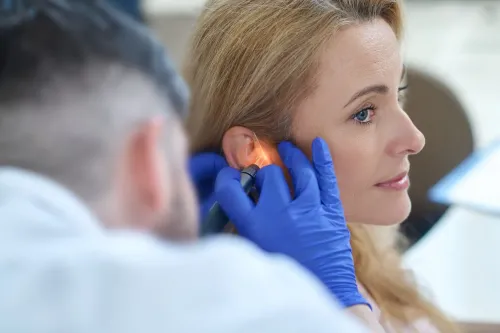
A glasses prescription gives the power needed at a measured distance from your eyes; it does not show how a lens will sit on your cornea. A contact-lens prescription therefore needs an eye examination and fitting, even when your spectacle power has not changed.
1. The practitioner checks your corneal health, tear film, eyelids, and vision. Dryness, allergies, inflammation, or an unnoticed corneal problem can make lens wear unsafe or uncomfortable.
2. The cornea is measured to select the base curve, which controls how closely the lens follows its front surface, and the diameter, which controls how much of the cornea the lens covers. A lens with the correct power can still move excessively, feel tight, or leave exposed areas if these measurements are wrong.
3. You wear a trial lens while the practitioner checks movement, centration, comfort, and usable vision. The final contact-lens prescription records the power and lens specifications, including base curve and diameter, rather than copying the glasses prescription.
The examination also guides choices about material, oxygen transmission, wearing time, and replacement schedule. A “high oxygen” label alone does not guarantee a healthy fit; material permeability and lens thickness, expressed as Dk and Dk/t, both matter.
At FOHS's K.B.H.Bachooali Charitable Eye&ENT Hospital, keep the trial-lens details and follow-up findings with your prescription so a future replacement is not chosen from power alone. Remove the lens and seek prompt eye-care advice for pain, marked redness, light sensitivity, discharge, or sudden blurred vision.
Related service
Optical Counter The Optical Counter at K. B. Haji Bachooali Charitable Ophthalmic and ENT Hospital, located in Parel, Mumbai, provides patients with convenient... View service → |
Use the trial lens to judge real-world fit
A lens that feels fine for 30 seconds can still be decentered, too tight, or unstable. Let the trial lens settle while you blink normally, look side to side, and read at the distances you use every day.
Ask the practitioner to check these points:
- The lens stays centred over the cornea and gives clear vision after blinking. Excessive lens movement can cause blur, while too little movement can leave the eye feeling dry or trapped under the lens.
- Vision remains usable for distance, computer work, and near tasks. If your prescription includes cylinder and axis, a toric lens that rotates can produce vision that clears and blurs as you blink or look around.
- A multifocal lens provides acceptable distance and near vision in the lighting you use. Its addition may improve reading while slightly reducing contrast or sharpness at a distance; decide whether that trade-off works for you.
- Comfort lasts beyond insertion. Persistent awareness, scratchiness, watering, or a lens that repeatedly shifts is evidence to reassess the base curve, diameter, material, or design rather than simply accept it.
A correct power does not rescue a poor fit. The practitioner also considers corneal shape, tear-film quality, eyelids, lens movement, and wearing time before finalising the prescription.
Remove the lens and seek prompt eye-care advice for pain, marked redness, light sensitivity, sudden blurred vision, unusual discharge, or worsening discomfort. Do not sleep in the trial lens unless overnight wear has been specifically prescribed and monitored.
Build safe cleaning, storage, and replacement habits
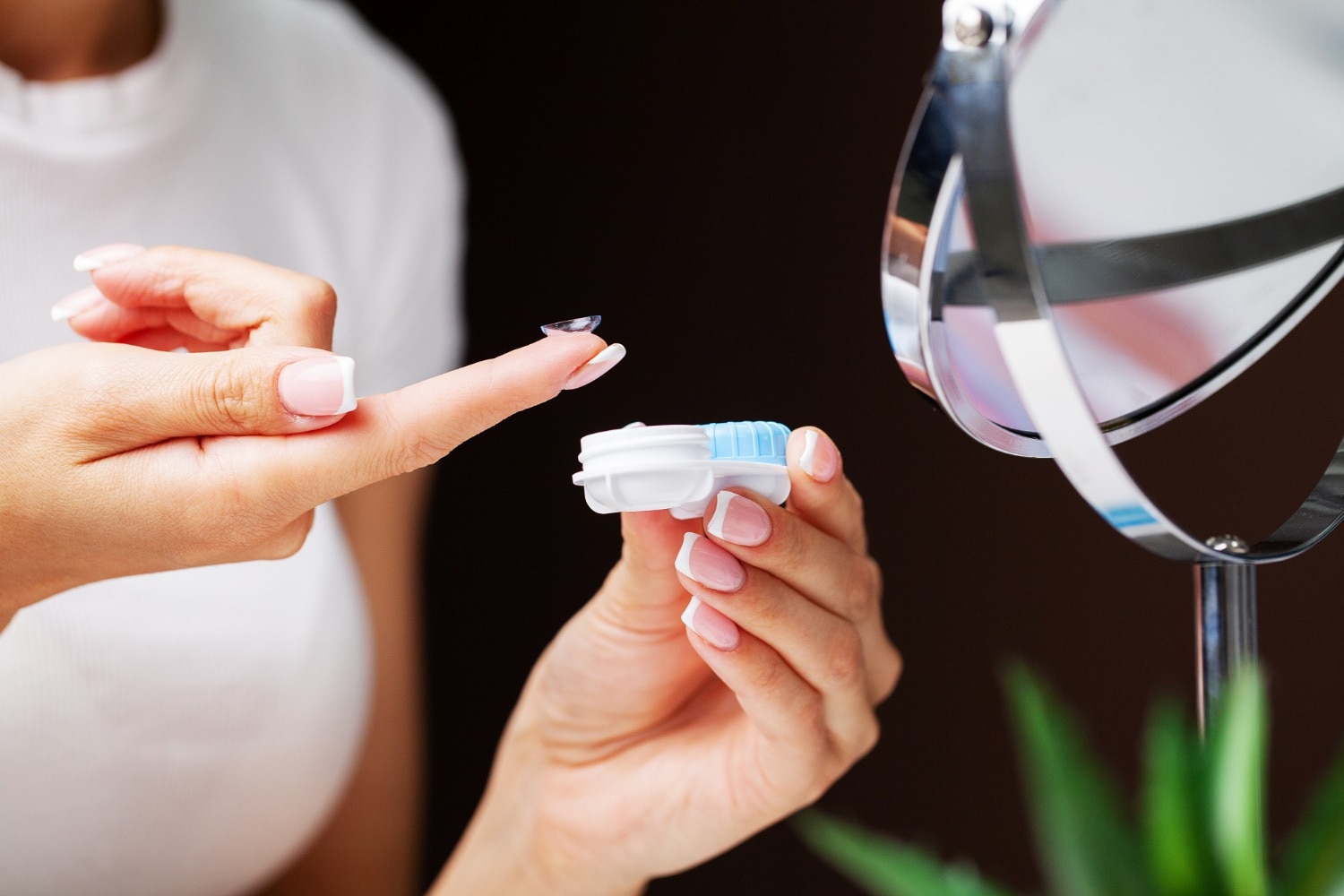
Wash and dry your hands before touching a lens. Inspect it for a tear, edge damage, or debris; place it on your fingertip, keep your upper and lower lids open, and insert it without letting the lens touch your nails, eyelashes, or sink.
Remove the lens with clean, dry fingers. For reusable lenses, follow the product instructions: rub and rinse with multipurpose solution when directed, then store each lens in fresh solution. Never use saliva, tap water, or old solution. Topping off solution leaves contamination behind.
Hydrogen-peroxide lens systems require the supplied neutralizing case and the complete neutralization time printed in the instructions. Putting unneutralized peroxide in your eye causes intense burning and can injure the cornea. Do not substitute peroxide for multipurpose solution unless the system is designed for it.
Treat the contact-lens case as a contamination risk. Empty it after use, rinse it with fresh contact-lens solution rather than water, and let it air-dry. Replace the case at least every three months or when your eye-care professional instructs you to do so.
- Discard daily disposable lenses after one day, even if they feel comfortable.
- Replace reusable lenses on the prescribed schedule; do not extend monthly or yearly wear.
- Do not sleep in lenses unless specifically prescribed and monitored. Overnight wear raises infection risk about six to eight times.
Remove the lens and contact an eye-care professional promptly for pain, marked redness, light sensitivity, sudden blurred vision, unusual discharge, or worsening discomfort. These signs are not normal adaptation, and continued wear can worsen a corneal infection or ulcer.
Frequently asked questions
How should you compare contact lens replacement schedules?
Choose daily, two-week, or monthly replacement based on your hygiene routine, wearing frequency, and budget—not lifespan alone.
How is the right contact lens design selected?
Your eye-care practitioner matches the design to your prescription and eye measurements, including requirements for astigmatism or other vision needs.
What happens during a contact lens prescription and fitting?
The practitioner reviews your prescription, measures your eyes, selects a lens, and checks how it sits and moves on the eye.
What should you check when trying a contact lens?
Judge vision and comfort during real-world activities such as reading, screen use, walking, and blinking before accepting the lens.
How should contact lenses be cleaned, stored, and replaced?
Follow the prescribed cleaning and storage routine, use fresh solution, avoid water, and replace lenses according to the schedule.